Today we are going to discuss how to get out of debt faster using zero percent credit cards. Most people want out of debt. However, they don’t want a second job. Also, they don’t want to cut every fun thing from life. So, here’s the good news:

You may be able to get out of debt faster without adding more money to your budget.

Instead, you simply change how interest works against you. Let’s walk through it step by step.

The Real Problem: Interest Slows Everything Down

When you carry credit card debt, interest works against you every day. So, even when you make payments, most of your money goes to interest first.

As a result:

  • Your balance drops slowly

  • Your payments feel endless

  • Debt sticks around for years

It feels like walking uphill.

However, what if the hill suddenly became flat? That’s exactly what a 0% credit card period does.

What Is a 0% Credit Card Offer?

A 0% credit card lets you move debt from one card to another and pause interest for a period of time.

Typically, that period lasts:

  • 6 months

  • 9 months

  • 12 months

  • Sometimes even longer

Meanwhile, your payments go fully toward the balance instead of interest. So, your debt finally starts shrinking faster.

“Aren’t We Just Moving Debt?”

This is the biggest concern people have.

They say:

“We’re just moving debt and adding fees.”

And yes, there is usually a balance transfer fee, often:

  • 3%

  • 4%

  • or 5%

However, the key question is:

Does the math still save money?

Let’s run an example.

Example: $14,000 Credit Card Debt

Let’s say:

  • Credit card debt: $14,000

  • Interest rate: 22%

  • Minimum payments only

If nothing changes, you could:

  • Stay in debt nearly 20 years

  • Pay over $30,000 total

That means interest alone costs more than the debt.

Now let’s test a 0% card.

Moving Debt to a 0% Card

Suppose:

  • Transfer fee = 5%

  • 0% period = 9 months

  • Payments stay the same

Yes, your balance rises slightly from the fee.

However, interest stops for nine months.

So now:

  • Payments hit the balance directly

  • Momentum builds quickly

  • Debt shrinks faster

Result?

Your payoff time can drop to around 6 years instead of 20.

Also, total payments can drop by nearly $10,000.

And remember: You did not add extra money to your budget.

Why Momentum Matters

Debt payoff works like pushing a heavy ball. At first, it barely moves. However, once it rolls, it keeps going faster.

Pausing interest gives you that push. So, instead of fighting interest every month, you start winning.

What Happens If You Find a Better Offer?

Let’s say you shop around and find:

  • A 12-month 0% offer

  • And a slightly lower future rate

Now momentum lasts longer.

As a result:

  • Payoff time drops even more

  • Savings can reach $12,000 or more

  • Debt disappears years sooner

Again, no extra income needed.

Important Things to Watch For

Before moving debt, check three things.

1) Length of the 0% Period

First, longer is better.

More time without interest means faster payoff.

2) Transfer Fee

Next, compare fees.

Even so, a fee often costs less than months of high interest.

3) Future Interest Rate

Finally, check the rate after 0% ends.

Lower or equal rates help protect your progress.

Small Payment Timing Trick

Here’s another tip. Credit cards charge interest daily.

So:

  • Paying earlier saves interest

  • Waiting until the due date costs more

Therefore, paying sooner helps your balance drop faster.

Key Reminder: This Is Not About More Debt

This strategy is not about:

  • Getting new spending money

  • Adding more cards

  • Growing debt

Instead, it’s about:

✅ Using better terms
✅ Lowering interest drag
✅ Creating payoff momentum

In short, you use the system to help you.

Run Your Own Numbers

Every situation is different. So, the best step is simple:

  • Run your numbers in a calculator

  • Compare current payoff vs. 0% payoff

  • Review results with your partner

  • Then decide together

When families see the math, the decision becomes clearer.

Final Thought

You don’t always need more income to fix debt. Sometimes, you simply need interest to stop fighting you. And when interest pauses, momentum builds. Then, debt finally starts moving out of your life faster. So, run your numbers, shop smart, and use 0% cards wisely. Because when used correctly, they can help you get out of debt faster, without changing your lifestyle.

Watch our most recent video to find out more about: how to get out of debt faster using zero percent credit cards.

0 Comments/by

Today we are going to discuss what credit score you should have for a cash out refinance. What is a Cash Out Refinance?A cash out refinance lets you replace your current mortgage with a new one. The new loan is for more than you owe on your house and you get the difference in cash. This money can be used for anything you need.

Why Does Credit Score Matter for a Cash Out Refinance?

Your credit score shows how well you handle money. Lenders use it to decide if you are a good risk. Therefore, a higher score makes it easier to get a loan with good terms.

Minimum Credit Score Requirements for Cash Out Refinance

Here’s a simple guide to credit scores and cash out refinancing:

  • Excellent Credit (740 and above): You will likely get the best rates and terms.
  • Good Credit (700-739): You can still get good rates but not the very best.
  • Fair Credit (620-699): You can get a loan, but the rates might be higher.
  • Poor Credit (below 620): It will be hard to get a loan. You might need to improve your score first.

How to Improve Your Credit Score

If your credit score needs a boost, here are some tips:

  • Pay Bills on Time: This is the best way to improve your score.
  • Reduce Debt: Try to pay down your credit cards and other loans.
  • Check for Errors: Look at your credit report and fix any mistakes.
  • Limit New Credit: Don’t open new credit accounts right before applying for a loan.

Other Factors Lenders Consider

Credit score is important, but it’s not the only thing lenders look at. They also consider:

  • Income: Do you make enough money to cover the new loan payments?
  • Debt-to-Income Ratio: This is how much you owe compared to how much you make.
  • Home Equity: The more equity you have, the better your chances of approval.

Final Thoughts

Getting a cash out refinance can be a great way to get extra cash. Make sure that your credit score is in good shape in order to get the best terms for your cash out refinance. If you need help improving your score, start with the tips above.

Contact Us Today!

Do you need help navigating your financial future? Contact us today!

0 Comments/by

Today we are going to discuss what credit score you need for a HELOC. To clarify, getting a Home Equity Line of Credit (HELOC) can help you tap into your home’s value. But what credit score do you need? Let’s break it down!

Understanding HELOC

A HELOC is like a credit card. However, instead of borrowing from a bank, you borrow against your home’s equity. You can use this money for repairs, investments, or anything else.

The Credit Score Sweet Spot

Good Credit Score

  • Score Range: 700+
  • Why It’s Good: Lenders see you as low risk.
  • Benefits: Lower interest rates and better terms.

Fair Credit Score

  • Score Range: 640-699
  • Why It’s Okay: You’re still eligible, but terms might not be as good.
  • Benefits: You can still get a HELOC, but interest rates may be higher.

Poor Credit Score

  • Score Range: Below 640
  • Why It’s Hard: Lenders see you as high risk.
  • Options: It’s tough, but not impossible. You may need to improve your score first.

Tips to Boost Your Credit Score

  1. Pay Bills on Time: Consistency is key.
  2. Reduce Debt: Keep your credit card balances low.
  3. Check Your Credit Report: Look for mistakes and fix them.
  4. Avoid New Debt: Don’t open new credit lines if you don’t need to.

Other HELOC Requirements

Besides credit scores, lenders look at other things:

  • Home Equity: How much is your home worth compared to your mortgage?
  • Income: Do you have a steady income?
  • Debt-to-Income Ratio: How much debt do you have compared to your income?

Why Your Credit Score Matters

A good credit score shows lenders that you’re reliable. It can make the process of getting a HELOC smoother and cheaper.

Conclusion

Getting a HELOC depends on more than just your credit score, however, having a good score helps. Remember to keep an eye on your credit and make improvements where you can. In doing so, you’ll be in a better position to get the HELOC you need.

Contact Us Today!

Do you need help navigating your financial future? Contact us today!

0 Comments/by

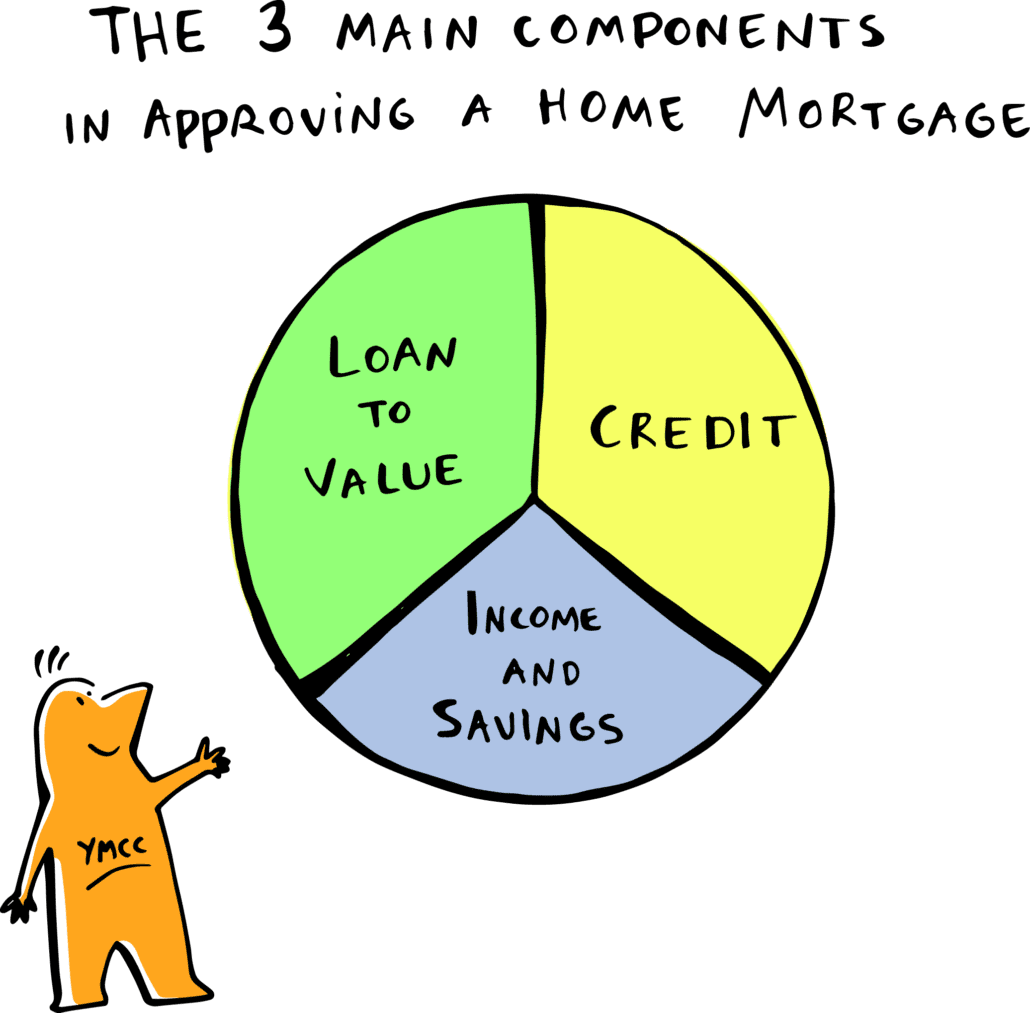
Do you know what the mortgage approval process looks like? Well, here’s a snapshot:

The mortgage approval process is determined by three main factors:

  1. Credit score.
  2. Income/savings.
  3. How much money you put down on a house (or the loan-to-value).

The higher each factor is, the easier it is to get a loan. Why? Because there’s little to no risk for a mortgage company. You’ve proven you’re financially stable.

What if one of these three factors aren’t good? Well, you need to find a way to balance things out.

To learn more credit strategies and debt management, contact us!

0 Comments/by

Today, we’re kicking off our 90-Day Challenge!

What is the 90-Day Challenge? Simply put, it’s when we pick an activity we love to do and stick with it for 30, 60, or 90 days.

The key is choosing an activity that’s fun, fast, and CHEAP. Reading, hiking, swimming, biking, writing—it can be just about anything as long as it doesn’t cost too much.

By focusing on activities we enjoy, we stay focused and busy—which leads to spending less on random things out of sheer boredom. Boredom is one of the main reasons we hop online and shop, or go out for expensive meals, or find other ways to spend our hard-earned cash on things we don’t really need.

Give yourself a specific (and fun) purpose this coming month, and you’ll quickly (and easily) break free of bad financial habits!

0 Comments/by