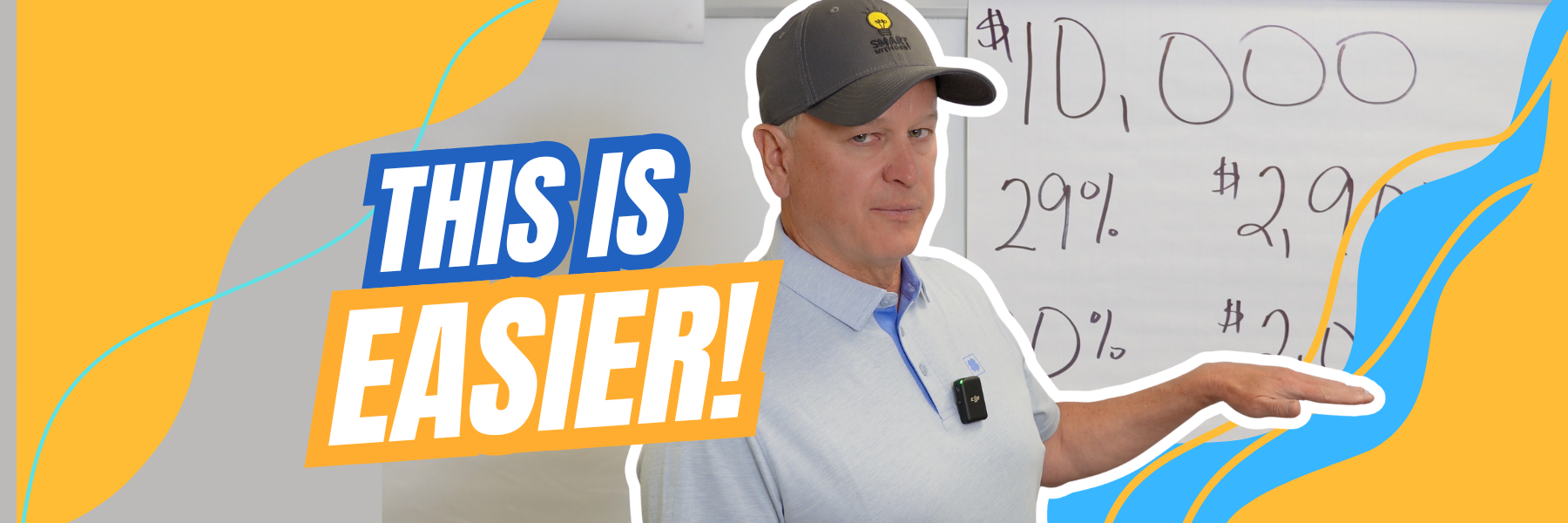
Today we are going to discuss the lazy way to pay off debt faster: Work Smarter, Not Harder with your debt. Most people believe getting out of debt has to be painful. You hear the same advice everywhere. Cut spending. Cancel fun. Work more hours. Sell things. However, there is a better way. You do not need to make life harder to get out of debt faster. Instead, you can make a simple change. First, focus on paying the banks less. Then keep more money for yourself. In other words, the lazy way to pay off debt faster is simple: lower the cost of your debt before you start paying it down. When you do this, the same payment can wipe out debt much faster.
Tag Archive for: smart with debt
Today we are going to discuss why interest rates decide how fast you’re debt-free. Many people think debt freedom is all about how much you pay each month.
However, there is another factor that matters just as much.
Interest rates.
In fact, the rate you pay often decides how long you stay in debt. And sometimes it can add months or even years to your payoff time. So today we will look at one simple idea: Lower the cost of your interest first. Then pay the debt down.
First, Let’s Look at the Big Picture
Credit card balances in the United States keep growing.
According to research from the Federal Reserve Bank of New York, Americans ended 2024 with over $1.28 trillion in credit card debt. That is a huge number. And because interest rates are high, many people feel stuck making payments every month. However, most people are not stuck because of their payment amount. Instead, they are stuck because of their interest rate.
The Simple Truth About Interest
Interest works like a drag on your progress. The higher the rate, the longer it takes to pay off the balance.
In other words:
-
Higher interest = more payments
-
Lower interest = fewer payments
So before you cut your budget or get another job, it helps to cut the cost of the debt first.
What Credit Card Interest Looks Like Today
Interest rates vary depending on the lender and your credit score.
For example, research cited by Forbes shows average credit card rates around:
-
Credit unions: about 15.9%
-
Large banks: about 21.46%
-
Lower credit scores: about 25.65% or higher
Meanwhile, store cards can reach 30% or more. Therefore, even small rate differences can change your payoff timeline.
Example: Same Debt, Same Payment, Different Interest
Let’s look at a simple example.
Suppose someone has:
-
$7,500 credit card balance
-
$250 monthly payment
Now let’s see what happens at different interest rates.
Scenario 1: Credit Union Rate (15.9%)
If the rate is 15.9%, the debt is paid off in about:
-
39 months
Total paid over time:
-
About $9,600
That includes the original balance plus interest.
Scenario 2: Typical Bank Card (21.46%)
Now let’s keep the same payment but increase the interest rate.
At 21.46%, the payoff time becomes:
-
About 43–44 months
That means roughly 4 to 5 extra payments. So instead of finishing in May, you might still be paying through the summer.
Scenario 3: Higher Interest (25.65%)
Now let’s look at a higher rate.
At 25.65%, the payoff timeline stretches to:
-
Almost 49 months
That is 10 extra payments compared to the lower rate. In other words, you are making payments almost an extra year. And the monthly payment did not change.
Why This Matters in Real Life
Those extra payments matter more than people think.
For example:
-
10 extra payments × $250 = $2,500
-
That is one-third of the original balance
That money could go toward:
-
A vacation
-
A family fund
-
Emergency savings
-
Or simply ending your payments sooner
However, high interest sends that money to the bank instead.
The First Rule of Paying Off Debt
Many people start with popular payoff strategies like:
-
The Snowball method
-
The Avalanche method
And those strategies can help. However, there is often a better first step.
Step One: Lower the Cost of the Debt
Before you start attacking balances, look for ways to reduce the interest rate.
For example:
-
Move balances to lower-rate cards
-
Use 0% balance transfer offers
-
Consider fixed-rate personal loans
-
Or use a home equity loan if it makes sense
When the rate drops, the same payment suddenly works harder. As a result, the debt disappears faster.
Think of Interest Like a Leaky Bucket
Imagine carrying water in a bucket with holes.
You could:
-
Walk faster
-
Work harder
-
Carry more water
However, water keeps leaking out. Interest works the same way. The higher the rate, the more money leaks out of your payments. So instead of working harder, it helps to fix the leak first.
Get Into Better Debt Before Getting Out of Debt
This idea surprises many people.
But it works.
First, move your debt into the lowest cost option available.
Then focus on paying it down.
When the interest is lower:
-
Your balance falls faster
-
Your payoff date arrives sooner
-
And your budget gets relief sooner
That means less stress and more freedom.
The Goal: Pay the Bank Less
The goal is simple.
Stop paying the bank more than you have to.
Because when interest drops:
-
Your payments stay the same
-
Your timeline shrinks
-
And your money starts working for you again
As a result, you reach the final payment faster. And that moment feels great.
A Simple Next Step
Start by running the numbers.
Look at:
-
Your current balances
-
Your interest rates
-
And how long it will take to pay them off
Then compare that with lower-rate options. Because once you see the math, the path becomes clearer.
And remember:
The less interest you pay, the faster you become debt-free.
So lower the cost first. Then watch the payments disappear.
Watch our most recent video to find out more about: Why interest rates decide how fast you’re debt-free
Today we are going to discuss when refinancing makes sense (even with a low rate). Many homeowners ask a simple question:
“Why would I refinance if I already have a good rate?”
At first, that sounds like an easy answer. However, the truth is a little different. Because refinancing is not always about the rate. Instead, it is often about your payments, your goals, and your timeline. So before you decide anything, the smart move is simple. Run the test. Look at where you are now. Then compare it to where a refinance might take you.
First, Run a Simple Refinance Test
Before anything else, start with the numbers.
You only need to compare two things:
-
What your payment is now
-
What your payment would be after refinancing
Next, look at how long you plan to keep the loan.
For example, you might keep the loan for:
-
3 years
-
5 years
-
10 years
However, most people do not keep a mortgage for the full 30 years. Therefore, the real test is how the loan works during the time you expect to keep it. So once you know those numbers, you can quickly see which option puts you in the better position.
Sometimes a Higher Rate Can Still Lower Your Payment
This surprises many homeowners.
Even if rates go up, refinancing can still help your monthly payment.
Here is why.
Let’s say you have:
-
20 years left on your mortgage
-
A 4.5% rate
-
A payment of $1,800 per month
Now imagine you refinance into a new 30-year loan at 6%. Even though the rate is higher, the payment might drop to $1,450 per month. So in this case, the rate increased. However, the payment went down. Therefore, the question becomes simple: Would $350 per month help your life right now? For many families, the answer is yes.
Lower Payments Can Create Breathing Room
Sometimes life changes. Maybe expenses go up. Maybe income changes. Or maybe you just want more breathing room in your budget. Because of that, refinancing can give you relief.
For example, a lower payment can help you:
-
Reduce monthly stress
-
Free up money for savings
-
Handle short-term financial pressure
-
Give your budget more flexibility
So even with a higher rate, a refinance can still help you stabilize your monthly cash flow.
Another Reason: Debt Consolidation
Sometimes the mortgage is the lowest-cost debt available.
Therefore, some homeowners refinance to consolidate other debt.
For example, someone might have:
-
$20,000 in credit card balances
-
$15,000 in personal loans
Those payments might add up to $700 or $800 per month. However, rolling that debt into a refinance could lower the total payment. As a result, the monthly budget becomes easier to manage. Again, this does not mean refinancing is always the answer. However, running the numbers will quickly show you if it helps.
Focus on the Time You Plan to Keep the Loan
Many people make a common mistake. They look at the 30-year total cost of the loan. However, that number often does not matter. Because most homeowners refinance, sell, or move long before the loan ends. Therefore, the real test looks like this:
Monthly payment × months you plan to keep the loan
For example:
If you plan to keep the mortgage 3 years, then run the numbers for 36 payments.
Then compare:
-
Your current loan payments over 36 months
-
Your refinance payments over 36 months
-
Plus the closing costs of the refinance
Once you do that math, the answer usually becomes clear.
Ignore the Noise and Focus on Your Situation
Many people get advice from everywhere. Neighbors. Friends. News headlines. Social media. However, those opinions do not know your numbers. Therefore, the only thing that matters is what works for your situation.
Ask yourself:
-
Do I want a lower payment right now?
-
Am I trying to simplify my debt?
-
Do I want more breathing room in my budget?
Once you answer those questions, the math will guide the decision.
Good Debt Should Make Life Easier
Debt should help your life. It should help you buy a home, build stability, and move forward. However, it should not create constant stress. Because of that, refinancing can sometimes improve your position, even when the rate goes up.
Again, the key is simple.
Run the numbers.
Compare:
-
Your payment today
-
Your possible payment after refinancing
-
The cost during the time you plan to keep the loan
Once you see those numbers, you will know what makes the most sense.
Run Your Numbers First
Before talking to any lender, take a few minutes to test the numbers yourself.
Because when you understand your payments first, you can make decisions with clarity and confidence.
👉 Use our free refinance calculator to run your test.
It only takes a minute.
However, it can quickly show you which option puts you and your family in the best position now and in the future.
Today we are going to discuss the 3D system: How to take control of your debt. Pay the Least. Live the Most. Most people say, “Avoid debt at all costs.” Instead, we say: Use debt wisely and pay the least you can for it.
After all, debt helps people:
-
Buy homes
-
Buy cars
-
Go to school
-
Grow businesses
So, debt is not the enemy. Overpaying for debt is. Therefore, if you lower the cost of your debt, you raise the quality of your life. And when you pay the least, you truly live the most.
That’s why we created the 3D System: Discover. Design. Deploy.
Now, let’s break it down step by step.
Why Debt Feels So Confusing
First, we need to understand something important.
Consumer debt is still fairly new in our culture. Credit cards, student loans, and easy mortgages didn’t really take off until the late 60s and 70s. Because of that, many parents and even grandparents never learned how to manage modern debt.
As a result, many families simply jumped in and tried to figure it out along the way.
Therefore, debt education has lagged behind.
That’s exactly why we focus on clarity first. When you understand your numbers, fear goes down. Then, confidence goes up.
And remember: Math is your friend.
Step 1: Discover
Know What You Have and What It’s Costing You
Before you change anything, you need to see everything.
So first, gather:
-
Credit cards
-
Personal loans
-
Car loans
-
Student loans
-
Mortgage balances
-
HELOCs or home equity loans
Then, look at two numbers:
-
What is the monthly payment?
-
What will it cost you over time?
For example, imagine three people each owe $10,000:
-
One puts it on a 24% credit card.
-
One uses a personal loan.
-
One uses a HELOC.
Even though they owe the same amount, they pay very different totals over time. That’s the problem.
Most people only look at the monthly payment. However, the real story shows up in the long-term cost.
Therefore, discovery means:
-
Putting all debt in one place
-
Seeing the total cost
-
Understanding how interest compounds
No guessing. No fuzzy math. Just clear numbers on a screen. Once you see it clearly, you feel calmer. And when you feel calmer, you make better choices.
Step 2: Design
Build a Better Debt Structure
Now that you know where you stand, it’s time to design something better.
However, here’s the key: Don’t start with “How do I pay it off faster?” Start with “How do I lower the cost first?” Because when you lower the rate, you speed up payoff automatically.
For example:
If someone pays 24% on a credit card, they fight uphill every month.
But if they move that same balance to:
-
A lower-rate personal loan
-
A fixed-rate home equity loan
-
A 0% credit card promotion
Suddenly, the interest slows down. And when interest slows down, momentum builds.
Now ask yourself:
-
Do I want lower monthly payments?
-
Do I want to pay it off faster?
-
Do I want more breathing room each month?
Your goal determines your design.
Also, look at what helps you:
-
Credit score
-
Home equity
-
Stable income
-
Family lending options
-
Promotional 0% offers
Sometimes, improving a credit score by 50–100 points saves hundreds per month. That’s not small. That’s powerful.
So, design means:
-
Compare options
-
Run the numbers
-
Test different paths
-
Choose the lowest-cost structure
Again, no pressure. Just comparison.
Step 3: Deploy
Put the Right Debt in Place
Now, if the numbers make sense, you deploy. However, you only deploy if it improves your position.
For example:
If a 0% card for 18–24 months cuts thousands in interest, that’s worth exploring.
Even if you pay a 3–5% transfer fee, that is far less than paying 24% annually.
That difference can shave years off payoff time. Or maybe a local credit union offers better HELOC rates.
Or maybe a fixed-rate home equity loan protects you from rising rates. Because you ran the numbers first, you now shop with confidence. Instead of asking, “What can I get approved for?” You ask, “Does this improve my structure?” That’s powerful.
The Big Idea: Better Debt First
Many people think they must suffer first.
They think:
-
Cut everything.
-
Work more.
-
Stress more.
However, we believe something different.
First, get into better debt.
Then, decide what to do with the savings.
You can:
-
Pay off debt faster
-
Build savings
-
Invest
-
Or simply breathe easier
Either way, you win.
The 3D System in Simple Terms
Discover
See your full picture. Know your cost. Remove emotion.
Design
Lower the rate. Compare options. Test scenarios.
Deploy
Move into better debt if it improves your numbers. That’s it. No stress. No sales pressure. Just math.
Pay the Least. Live the Most.
Debt itself is not evil.
After all, without debt:
-
No homes
-
No cars
-
No education
However, expensive debt steals your future quietly. Therefore, your goal is simple: Keep more of your money. Give less to the banks. When you run your numbers through the 3D System, you take control. You gain clarity. Then you build confidence. Finally, you move forward with certainty. And that’s how you pay the least, and live the most.
Watch our most recent video to find out more about:the 3D system: How to take control of your debt
Today we are going to discuss a cash-out refinance vs home equity loan – which saves you more money? Before you decide, run your numbers. This is not opinion. Instead, it is just math. You compare two paths, and then the better one shows up.Also, many couples see debt differently. One person often trusts numbers and tools. Meanwhile, the other person just wants safety and comfort. However, both people want to protect their family and home. So, instead of debating, let’s compare the numbers together.
First, What Are We Comparing?
We are comparing two ways to move high-cost debt into your home loan.
Option 1 — Cash-Out Refinance
You replace your entire mortgage with a new one. Then you pull cash out to pay off other debt.
Option 2 — Home Equity Loan
You keep your current mortgage. Then you add a second fixed loan to pay off debt. So, now let’s look at real numbers.
Example #1 — When a Home Equity Loan Wins
Here is the first example from the calculator.
Mortgage details
-
Original loan: $300,000
-
Rate: 4%
-
Loan started 5 years ago
-
Current balance: $271,000
-
Monthly mortgage payment (principal & interest): $1,432
Meanwhile, the household also has:
-
Extra debt: $40,000
-
Monthly debt payments: $1,250
So, the goal is simple:
✅ Lower monthly payments
✅ Pay the least amount over time
Cash-Out Refinance Numbers
If the new mortgage rate is 6%, then:
-
Monthly savings = $770 per month
That money could help with:
-
Kids’ activities
-
Vacations
-
Or simply making ends meet
However, we still need to compare the long-term cost.
Home Equity Loan Numbers
Suppose a local credit union offers:
-
Home equity loan rate: 7.12%
-
Loan length: 10 years
Then:
-
Monthly savings = $763 per month
So, the monthly savings look almost the same.
But here is the big difference.
👉 Keeping the first mortgage and using a home equity loan saves about $200,000 over the life of the debt.
That number stands out.
Stretching the Loan to Lower Payments
Also, home equity loans can stretch longer.
For example, if the loan runs 15 years instead of 10:
-
Monthly savings increase to $869
Meanwhile, lifetime savings drop a little, but still stay strong.
So, you can adjust payments based on your family’s needs.
Example #2 — When a Cash-Out Refinance Wins
Now let’s flip the situation.
Suppose the original mortgage looked different.
Mortgage details
-
Original loan: $300,000
-
Rate: 6.75%
-
After 5 years balance: $281,600
-
Mortgage payment: $1,945
Now rates changed.
-
New refinance rate: 6%
-
Home equity loan option: 12%
So, what happens?
Cash-Out Refinance Results
Now the refinance saves:
-
$1,218 per month
That is a huge monthly improvement.
Home Equity Loan Results
Meanwhile, stretching the home equity loan to 15 years only saves:
-
$757 per month
Yes, lifetime savings may reach about $39,000, but many families need monthly relief more than long-term savings.
So, in this case, the refinance works better.
Why Running Your Numbers Matters
Notice something important.
In Example #1, the home equity loan saved $200,000 long-term.
In Example #2, the refinance saved far more per month.
So, the right answer changes based on your situation.
Therefore, guessing can cost you money.
Think About the Big Choices
Also, refinancing costs money. Closing costs often run 2% to 2.5% of the loan amount. Because of that, it can take 3 to 7 years just to break even.
Meanwhile, keeping a good low-rate mortgage often saves money long term.
So, again, numbers tell the truth.
What Should Families Do Next?
Instead of arguing or guessing:
-
Look at your current mortgage balance.
-
Check your interest rate.
-
Add your current debt payments.
-
Compare both options.
-
Then choose what works best for your home.
Simple steps. Clear path.
The Big Goal
This is not about perfection.
Instead, it is about making smart big moves.
Because one good decision can mean:
-
More money now
-
Less stress monthly
-
Or even better retirement savings later
So, run your numbers. Compare both paths. Then move forward with confidence.
Final Thought
Cash-out refinance is not always right. Home equity loans are not always right. However, the better option becomes clear once you compare the numbers. So, before jumping into a refinance or loan, test your situation first. Because smart debt choices help you enjoy life now and protect your future.
Watch our most recent video: cash-out refinance vs home equity loan – which saves you more money