Today we are going to discuss the lazy way to pay off debt faster: Work Smarter, Not Harder with your debt. Most people believe getting out of debt has to be painful. You hear the same advice everywhere. Cut spending. Cancel fun. Work more hours. Sell things. However, there is a better way. You do not need to make life harder to get out of debt faster. Instead, you can make a simple change. First, focus on paying the banks less. Then keep more money for yourself. In other words, the lazy way to pay off debt faster is simple: lower the cost of your debt before you start paying it down. When you do this, the same payment can wipe out debt much faster.
Today we are going to discuss the HELOC payment everyone misses (pay it off faster). Most people look at one number when they open a HELOC.
That number is the minimum payment.
Yes, that payment matters.
However, it is only part of the story.
Because of that, many people miss the most important HELOC payment of all.
This one missing payment decides whether your HELOC helps you… or haunts you.
So let’s break it down in a simple way.
The Payment Most People Focus On
When you pull money from a HELOC, the lender gives you a minimum payment.
Usually, that payment is:
-
Mostly interest
-
Very little principal
-
Designed to keep the balance around for years
Now, that is not “wrong.”
But at the same time, it is incomplete.
Because if you only make that payment, the balance can sit there for:
-
10 years
-
20 years
-
Or even longer
And honestly, that creates stress.
The Missing HELOC Payment
Here’s the payment most people never calculate.
The missing payment is the payment that:
-
Pays off both principal and interest
-
Eliminates the balance
-
Does it within your chosen time frame
In other words, this payment makes sure anything you put on your HELOC goes to zero.
That matters because:
-
Rates change
-
Markets change
-
Life changes
So instead of guessing the future, you control the timeline.
Why a Time Frame Matters
Many HELOCs turn into long-term debt by accident.
People say:
“I’ll deal with it later.”
Then later becomes years.
Because of that, it helps to decide up front:
-
How long the balance stays
-
When it disappears
-
How much stress it creates
For example, some people choose:
-
12 months
-
18 months
-
24 months
The key is simple.
You pick the plan.
The Simple Calculation You Need
Good news — this is easy.
You only need three numbers:
-
The balance you want to use
-
The interest rate
-
Your payoff time frame
That’s it.
Then you calculate the payment that fully amortizes the balance.
In plain words, that means it pays off everything, not just interest.
A Real Example
Let’s walk through this step by step.
Say you want to:
-
Use $30,000
-
For home improvements
-
With a HELOC rate around 8%
Now, instead of using 8%, you might choose 9%.
Why? Because padding the number gives you breathing room.
Next, you pick your timeline.
Let’s say two years.
So now you plug in:
-
$30,000 balance
-
9% interest
-
24 months
The result?
Your target payment comes out to about $1,400 per month.
Why This Payment Changes Everything
That $1,400 includes:
-
The interest
-
The principal
-
A clear end date
Because of that, you now know:
-
If it fits your budget
-
If the project makes sense
-
If the HELOC helps or hurts
If the payment works, great.
If it doesn’t, you rethink the plan before pulling the money.
That protects:
-
Your budget
-
Your home
-
Your peace of mind
What If Life Happens?
Plans change.
That’s normal.
Maybe in month 9 or 12:
-
Cash feels tight
-
You miss a full payment
Here’s the good part.
You still have options:
-
Pay the minimum that month
-
Recalculate the timeline
-
Stretch it to 25 or 26 months
Because you set a target early, you stay in control.
You don’t just let the balance drift.
Why HELOCs Work Best Short Term
HELOCs are great tools.
They offer flexibility and access to equity.
However, they are:
-
Variable rate
-
Tied to markets you can’t control
So instead of using them like a 30-year loan, they work best when:
-
Used with a plan
-
Paid down on purpose
-
Treated as short-term tools
That applies to:
-
Home improvements
-
Debt consolidation
-
Big purchases
The Takeaway
Don’t stop at the minimum payment.
Instead:
-
Calculate the missing payment
-
Pick your time frame
-
Create an exit plan
Because when you know your target, you:
-
Reduce stress
-
Avoid surprises
-
Stay smart with debt
And that’s how a HELOC stays a tool, not a burden.
Today we are going to discuss how to estimate your HELOC payment before you borrow. A HELOC can be a powerful tool. However, it can also feel confusing at first. That’s because your payment can change over time. Still, even with that uncertainty, you can get very close to your real payment. You just need to know what to look at.
So, let’s walk through it step by step. Along the way, we’ll keep things simple and use real examples.
First, Why HELOC Payments Are Estimates
Before we jump into math, let’s set expectations.
With a HELOC, you will never know the exact payment far into the future. That’s normal. In fact, almost all HELOCs have adjustable rates. Because of that, payments move when rates move.
Also, your balance can change. You might borrow more. You might pay it down. Because of this flexibility, your payment changes too.
That said, you can still estimate. And honestly, that estimate is good enough for smart budgeting.
Step One: Estimate Your Draw Period Payment
What Is the Draw Period?
The draw period is the time when you can use the line of credit.
During this phase:
-
You can take money out.
-
You can put money back in.
-
You only have to pay interest, not principal.
Because of that, this period is the easiest to estimate.
How Draw Period Payments Work
During the draw period, the payment depends on:
-
How much money you actually borrowed
-
The current interest rate
Importantly, the bank only charges interest on what you used. They do not charge interest on the full credit limit.
The Simple Draw Period Formula
Here’s the basic math:
Outstanding Balance × Interest Rate ÷ 12 = Estimated Monthly Payment
That’s it.
However, remember this is still an estimate. Rates change. Balances change. Also, interest is calculated daily. Even so, this gets you very close.
Draw Period Example
Let’s say:
-
Your HELOC limit is $100,000
-
You only used $50,000
-
The interest rate is 8%
Now let’s do the math:
-
$50,000 × 0.08 = $4,000 per year
-
$4,000 ÷ 12 = about $333 per month
So, for budgeting, you can round up and plan for $350.
Even better, you can always pay more. There is no penalty for that. In fact, paying extra lowers future interest.
Why You Should Recheck This Often
Rates change. Balances change. Because of that, you should re-estimate:
-
When rates move
-
When you borrow more
-
When you pay the balance down
Luckily, online HELOC calculators make this fast and easy.
Step Two: Estimate Your Repayment Period Payment
What Happens When the Draw Period Ends?
Eventually, the draw period closes. At that point:
-
You can no longer borrow from the line
-
Any remaining balance turns into a loan
-
You start paying principal and interest
Most banks give you about 20 years to repay it. Still, terms can vary. So, always ask before you sign.
Why This Estimate Matters More
This payment is usually much higher. Because of that, it can surprise people.
Also, this estimate is harder. That’s because:
-
You don’t know future rates
-
You don’t know your future balance
So, you should always estimate on the high end. That way, you stay safe.
Repayment Period Example
Let’s assume:
-
In 10 years, you still owe $80,000
-
The repayment term is 20 years
-
You estimate a high rate, like 11%
Using a loan calculator, that payment comes out to about $826 per month.
Now you know what you need to plan for. Even if the real number ends up lower, you’re ready.
Fixed or Adjustable During Repayment?
Some HELOCs:
-
Stay adjustable the whole time
-
Convert to a fixed rate when repayment starts
Neither option is “wrong.” However, your comfort with risk matters. If payment swings stress you out, a fixed option may feel better.
A Simple Rule That Helps
Here’s a helpful mindset:
If you wouldn’t want to pay for it over 20 years, don’t put it on a HELOC.
For example, many people use HELOCs for projects they plan to pay off in two years. That approach keeps things under control.
Is a HELOC Right for You?
A HELOC works best if:
-
You can handle changing payments
-
You like flexibility
-
You budget using estimates, not exact numbers
However, if uncertainty bothers you, a fixed-rate home equity loan may be a better fit.
Also, remember this: a HELOC is tied to your house. So, use it wisely. Avoid using it for random spending. Instead, protect your home and your future.
Final Thoughts
To sum it up:
-
During the draw period, estimate interest-only payments
-
After the draw period, estimate principal and interest
-
Always plan on the high end
-
Recheck your numbers often
Simple math creates clarity. And clarity builds confidence. That’s how you stay smart with debt.
Watch our most recent video: How to Estimate Your HELOC Payment Before You Borrow
Today we are going to discuss how you can move from debt stress to financial peace! Debt doesn’t just cost you money, it also steals your peace. If you feel like you’re always behind, dragging debt around like a heavy load, you’re not alone. However, here’s the good news: you can fix it, and you don’t need a fancy budget or a financial degree to get started.
Let’s walk through how to spot the drag, lower your costs, as well as start moving forward, faster.
What’s Dragging You Down?
Are you battling friction in your finances?
Here’s what that might look like:
-
Paying 24% or more on credit cards while someone else is paying 0%
-
Getting denied for better rates because your credit score is too low
-
Using the wrong kind of loan for the type of debt you have
-
Refinancing the wrong way, adding bad debt to your home loan
All of these things slow you down. You’re doing the same work as your neighbor, but it feels like you’re pulling a parachute while they’re gliding.
Why You’re Paying Too Much
Let’s break down four common mistakes:
First, Carrying High-Interest Credit Card Debt
Many people carry balances at 24% or even 30% interest. But your neighbor might be using a 0% credit card for 18 months or more. That’s money in their pocket, not the bank’s.
Second, A Low Credit Score
A 620 score might get you denied. A 740 score could unlock better terms. Same income. Same effort. But very different results.
Third, Ignoring Home Equity
Instead of paying 24% interest, you could use a home equity loan at 6%. That alone could save hundreds a month.
Finally, Refinancing Instead of Restructuring
Too many people do a full refinance and roll credit card debt into their mortgage. Instead, a simple home equity loan or HELOC could save thousands—without resetting the clock on your mortgage.
Real Example: You vs. Your Neighbor
Let’s say you both have $20,000 in credit card debt.
-
You are paying 24% interest. That’s about $400/month in interest alone.
-
Your neighbor uses a 6% home equity loan. That’s only $100/month.
That’s a $300 monthly difference or $3,600 a year. Imagine putting that into:
-
Family trips
-
Groceries
-
Date nights
-
Paying off debt faster
Your neighbor isn’t richer, they’re just dragging less. That’s the power of moving From Debt Stress to Financial Peace: Start Taking Control Today.
How to Reduce the Drag
You can make progress in just three simple steps:
Step 1: Know Your Interest Rates
Make a list of your credit cards, loans, and debts. Find out what interest rates you’re paying.
Step 2: Find a Better Option
Look into:
-
0% balance transfer cards
-
Home equity loans or HELOCs
-
Low-interest personal loans
-
Credit from family or friends
The goal? Pay less in interest and keep more of your money.
Step 3: Fix Your Credit
To get better terms, raise your credit score. You can:
-
Pay down balances before the due date
-
Dispute old or incorrect items
-
Ask a family member to add you as an authorized user on a credit card
Even small changes can bring big results.
From Debt Stress to Financial Peace: Start Taking Control Today
Debt is part of life, but how you carry it makes all the difference. By switching from high-cost to low-cost debt, you get more freedom, more fun, and more money to enjoy.
No more giving your extra cash to banks.
No more feeling stuck.
Just smart choices and better credit.
Remember, the tools are out there, Smart with Debt has free calculators as well as resources to help. You don’t need to change everything overnight. Just start small, and start now.
Because it’s time to go From Debt Stress to Financial Peace: Start Taking Control Today.
Watch our most recent video to find out more! https://youtu.be/zJzTnnfgPgw
When it comes to borrowing money, many people wonder:
Is a HELOC more dangerous than a credit card?
The answer?
Yes… and no.
Let’s break it down using real examples so you can decide what’s right for your situation.
How HELOCs Are Less Risky Than Credit Cards
Let’s start with interest. That’s the big one.
-
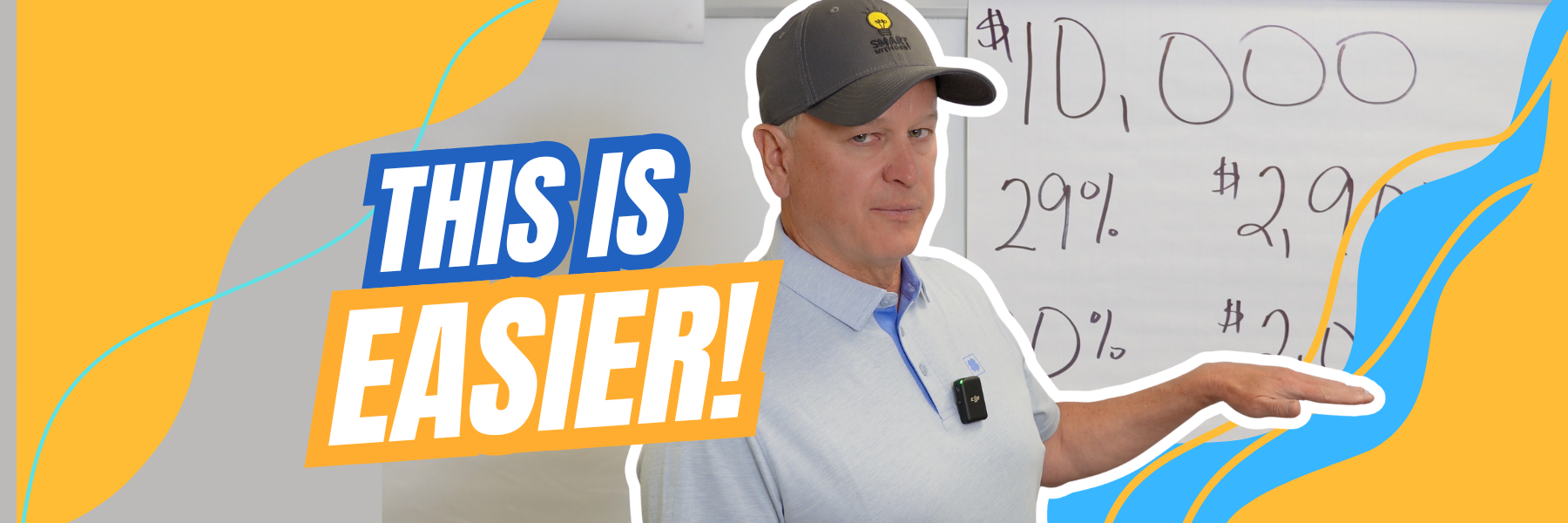
Most credit cards charge around 24% interest.
-
A HELOC (Home Equity Line of Credit) is closer to 8%.
So, if you owe $10,000…
-
A credit card might cost you $2,400/year in interest.
-
A HELOC? Just $800/year.
That’s a difference of $1,600 — and that money stays in your pocket instead of going to the banks.
That’s a huge win for your budget.
Lower monthly payments mean less stress and fewer risks of falling behind. You’re also not paying extra just to carry the debt.
How HELOCs Are More Risky Than Credit Cards
Now let’s talk about the risk.
A HELOC is a mortgage. That means it’s tied to your house. If something goes wrong and you miss payments:
-
It affects your credit more than a credit card would.
-
You could even face foreclosure.
That’s a big deal.
You’re giving up equity in your home and putting your property on the line. This is why you should only use a HELOC if you know where your repayment will come from.
If lowering your interest helps you get ahead, great.
But if you’re falling behind already, a HELOC might only delay the problem.
What About a Refinance Instead?
If you’re thinking about using your home to consolidate debt, a HELOC is usually a smarter option than a full refinance.
Here’s why:
-
Refinances roll your entire mortgage into the new loan.
-
If your current mortgage is at 3%, why bump the whole thing to 6% or 7%?
-
A HELOC lets you borrow just what you need, at a lower cost (sometimes as little as $500 vs. $5,000+ for a refinance).
Plus, most HELOCs let you borrow up to 80–85% of your home’s value.
So, Is a HELOC More Dangerous?
Only if you’re not careful.
✅ If you need to lower your payments and have a plan:
A HELOC can save you thousands and reduce financial stress.
⚠️ But if you’re struggling to make payments already:
Tying that debt to your house could make things worse.
Download Free Tools
Want to see the real numbers for yourself?
📥 Download our free tools at Smart with Debt:
-
Credit Cards vs HELOCs
-
Refinance vs HELOCs
These side-by-side comparisons show how much you could save — or risk — based on your situation.
Make your debt work for you, not against you. Contact us today to find out more.
That’s what being Smart with Debt is all about.
Watch our most recent video: “Is a HELOC More Dangerous Than a Credit Card?”